The Keizer-Salem Price Gap Closed This Year, and New Construction Explains Why
October 1, 2026
October 1, 2026
A buyer touring both cities this fall will notice something that would not have been true two years ago. An older three-bedroom resale in Keizer and a newly built three-bedroom in South Salem can carry almost the same list price. The easy read is that Keizer has caught up, that the two markets have folded into one continuous stretch of the I-5 corridor where the city line barely matters anymore. That read is wrong, and understanding why matters more than the number itself if you are choosing between the two places to live.
Mortgage forecasts published as recently as mid-2026 still describe Keizer the way agents have described it for a decade. A forecast from JVM Lending frames Keizer and neighboring Turner as the relative bargain of the corridor, with medians expected to sit in the upper $300,000s to low $400,000s while South Salem and East Salem carry higher price points tied to stronger amenities. That is the assumption most buyers walk in with. Keizer is the discount. Salem, especially the south side, is where you pay more.
The closed-sale data from this year tells a different story.
Over the three months ending May 2026, Keizer's median sale price came in at $448,000, down 4.3% from the same window a year earlier. Homes were selling for a median of $275 per square foot, up 3.4% year over year, and typical time on market had stretched to 49 days, up from 42 the year before. Ninety-six homes changed hands in May, up from 74 a year earlier, a sign of loosening inventory rather than tightening demand.
Over the three months ending June 2026, Salem's median sale price was $450,000, essentially flat, down just 0.075% from a year earlier. Per-square-foot pricing came in at $266, up 1.9% year over year, and days on market had stretched to 56, up from 46. Salem sold 536 homes in June, down from 546 a year earlier.
| Keizer (3 mo. ending May 2026) | Salem (3 mo. ending June 2026) | |
|---|---|---|
| Median sale price | $448,000 | $450,000 |
| Change year over year | down 4.3% | down 0.075% |
| Price per square foot | $275 | $266 |
| Days on market | 49, up from 42 | 56, up from 46 |
Two thousand dollars separate the median sale prices of two cities that were supposed to sit tens of thousands of dollars apart. The Keizer discount that lenders are still forecasting has, in the sales data, largely disappeared.
The two cities have been receiving different kinds of homes for years, and most of the new houses have gone to one side of the corridor.
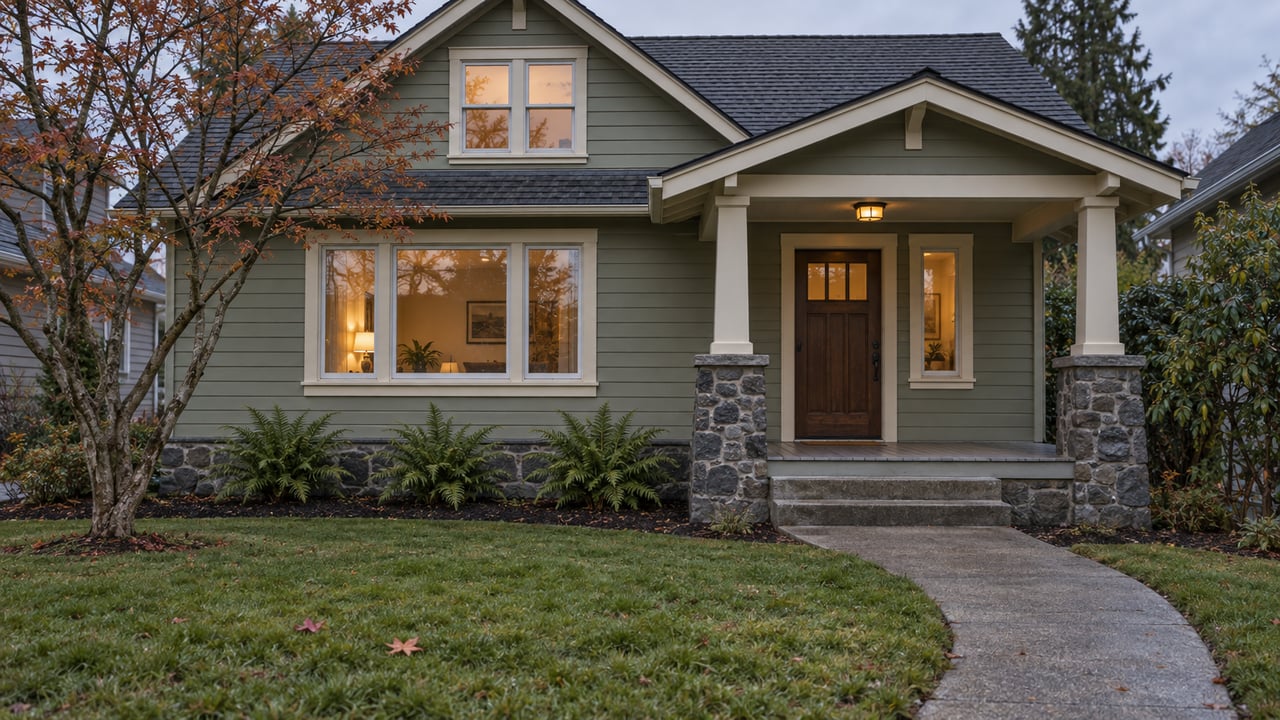
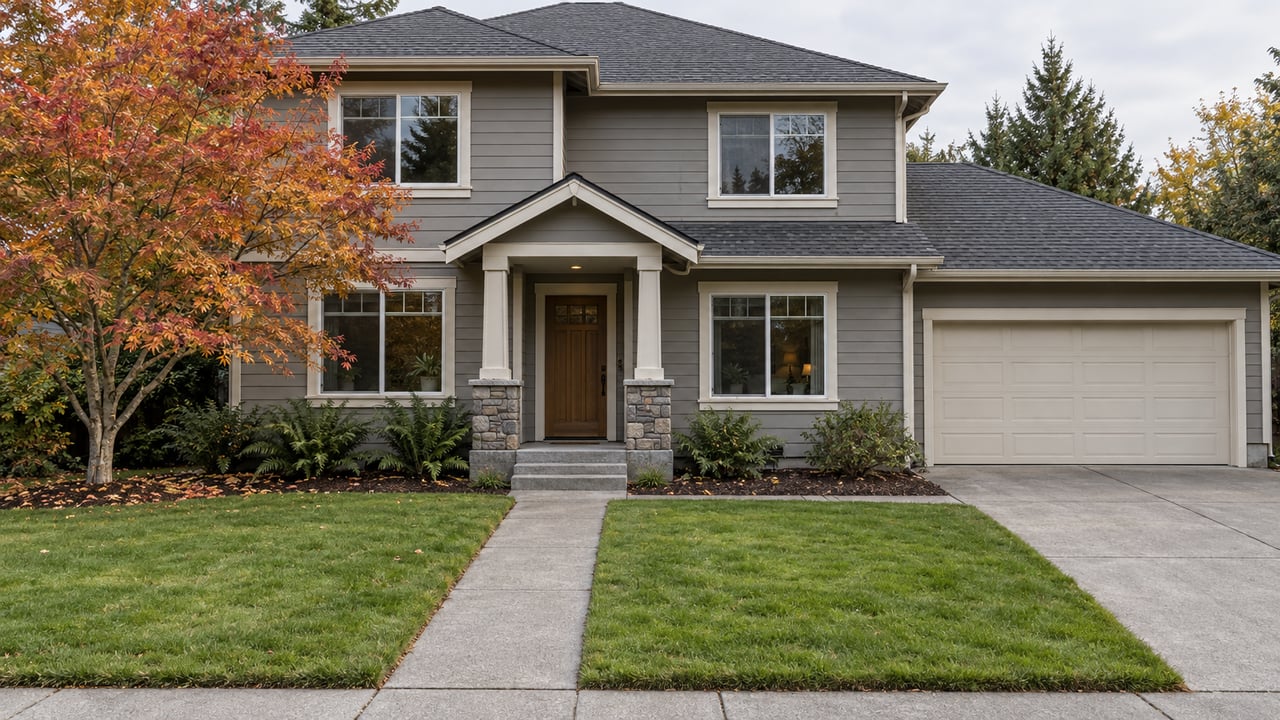
Market reporting on the Salem-Keizer corridor from spring 2026 describes a wave of new development landing in South Salem, with subdivisions built for move-up buyers and homes starting at nearly $550,000. Keizer and North Salem, by contrast, have seen almost no comparable new construction, relying instead on scattered infill lots and one-off custom builds. A separate account of the same corridor from earlier in the year describes the same pattern: significant new subdivisions in South Salem, and limited building activity in Keizer, North Salem, and West Salem beyond small infill projects.
That imbalance changes what a city's median actually measures. Salem's $450,000 median is a blend that includes a growing stream of new construction priced well above the old citywide average, which pulls the number up even as its existing resale stock behaves more like Keizer's. Keizer's $448,000 median has almost no new-construction component to lean on. It is, essentially in full, a read on what buyers are willing to pay for a home that was likely built decades ago.
The two medians landed in the same place. They got there by two different roads.
The days-on-market numbers point to the same split. Keizer's typical time on market grew by seven days year over year. Salem's grew by ten. Both markets are loosening, but the mechanism behind each is different.
In Salem, some of that stretch is coming from the new-construction side of the market, where higher list prices and larger inventory give buyers more room to wait for the right unit before committing. In Keizer, there is no new-construction cushion. Every day of added market time is happening inside a pool of resale homes, many of them older, and buyers who now have enough options to be selective are treating deferred maintenance differently than they did two years ago. A furnace that needs replacing or a roof near the end of its life is no longer something a Keizer buyer has to accept to get into the market. Rising inventory means they can simply look at the next listing instead.
That pattern is showing up in the most current data available. Listing figures for September 2026 put Keizer's median list price near $494,000, with per-square-foot values down roughly 4% from a year earlier and typical time on market holding around 60 days. The softening identified in the spring closed-sale numbers has not reversed heading into fall. It has continued.
A buyer comparing a $450,000 listing in Salem to a $448,000 listing in Keizer is not comparing two versions of the same thing. The Salem number might represent a new build in a subdivision with a builder warranty and modern mechanicals. The Keizer number is more likely a home from an earlier building era, priced in a market where sellers are having to work harder and buyers are gaining room to negotiate on condition.
A few questions are worth asking before treating the two medians as interchangeable:
None of this means Keizer is a worse place to buy. It means the price convergence between the two cities is a supply story, not a value story, and a buyer who understands that walks into a showing with sharper questions than one who is simply comparing two numbers on a listing sheet.
If you're weighing Keizer against Salem for your next move and want a read on what a specific address's price actually reflects, I'm happy to walk through it with you. Reach out to Yolanda Guzman and let's talk through what you're actually looking at.
Stay up to date on the latest real estate trends.


Working with Yolanda Guzman means more than just buying or selling a home—it means experiencing a higher level of service.