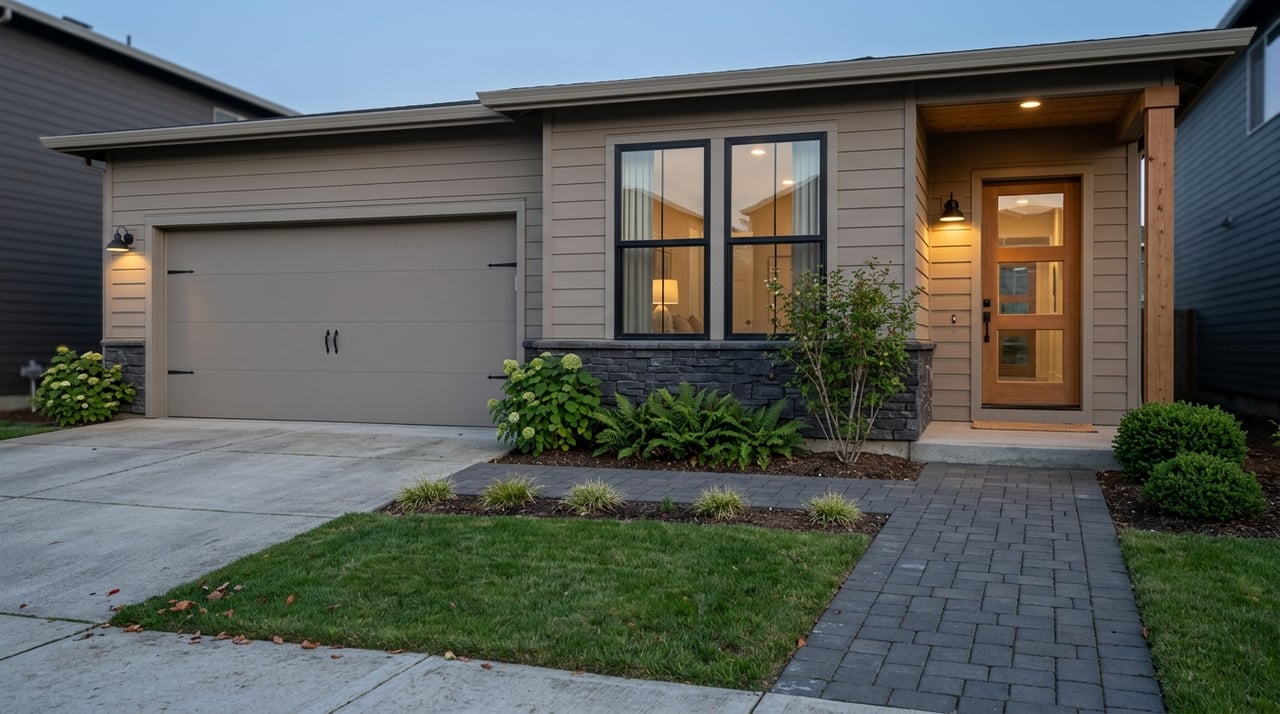
New Construction or Resale in Happy Valley: What Fits?
May 28, 2026
May 28, 2026
Trying to decide between a brand-new home and a resale property in Happy Valley? It is a bigger choice than just picking the one with the nicest kitchen. Your timeline, budget, repair tolerance, and comfort with paperwork all play a major role. This guide will help you compare both paths so you can make a smart move with more confidence. Let’s dive in.
Happy Valley has grown quickly over the years and continues to add housing through active planning and development. The city reports a population of 28,291, and its zoning and land-use framework shows that new neighborhoods and medium-density housing are still part of the local growth story.
That growth does not mean an easy market. March 2026 data from Realtor.com shows 279 homes for sale, a median listing price of $699,497, and a median of 41 days on market. Redfin reports a median sale price of $657,500, homes selling in 47 days, and a somewhat competitive market, which means both new construction and resale buyers still need to pay attention to timing and total cost.
New construction can be appealing if you want a home with newer systems, modern layouts, and fewer immediate repair surprises. It may also offer some level of customization, which is a major draw if you want to choose finishes or adjust certain design details before move-in.
At the same time, buying new construction usually means a longer and more detailed process. In Happy Valley, the city notes that building permits often come late in the overall approval path, after land-use approvals and public improvements are completed. Site development for subdivisions, planned unit developments, lot partitions, and middle housing can involve its own permitting as well.
Many buyers like new homes because they feel fresh, efficient, and easier to maintain at the start. You may also benefit from a builder-backed warranty, which can provide some peace of mind during the first years of ownership.
Oregon guidance says contractors must offer a new home warranty before or at signing, and the buyer must accept or reject that offer in writing. Warranty terms vary by contractor, so it is important to ask what is covered, what is excluded, and how long each part of the coverage lasts.
One of the biggest surprises for buyers is that the price tag may go beyond the advertised base price. In Happy Valley, the city lists significant system development charges and related fees for a single-family detached home, including transportation, parks, storm drainage, sanitary sewer, and water meter charges.
The city’s current page estimates average building permit fees of $7,525 for a 2,500-square-foot residence and total fees of $61,567 when SDCs, CETs, and building permits are combined. Based on the city’s March 2026 median listing price, that total is roughly 9 percent of the median before upgrades, landscaping, fencing, or HOA costs are added.
A model home can help you picture finishes and layout, but it should not be treated as proof of what comes with your purchase. Oregon CCB guidance makes it clear that the contract should define the scope of work, price, payment terms, change orders, and any warranties or guarantees.
That means you will want to ask clear questions early, such as:
If you do not get those details in writing, it can be hard to compare one new construction option to another.
In Oregon, the Construction Contractors Board says contractors should be licensed, bonded, and insured. Buyers are encouraged to check the contractor’s active license, complaints, disciplinary sanctions, bond, insurance, and endorsements.
The CCB also warns against unusually large down payments. For contracts over $2,000, the agreement must be in writing, which is another reason it helps to slow down and review every page carefully before you commit.
Resale homes often work well if you want a quicker move, an established lot, or the ability to walk through the exact home you are buying. In a place like Happy Valley, that can be a major advantage when you want certainty about layout, yard size, views, and neighborhood feel.
But resale homes come with their own tradeoffs. You may face older systems, future maintenance needs, or repair items that are not obvious during a casual showing. In a relatively active market, you may also need to make decisions quickly even when buying an existing home.
The biggest advantage of a resale home is information. You can inspect the actual property, review seller disclosures, and evaluate the condition of visible systems and structures before closing.
Oregon’s Seller’s Property Disclosure Statement law adds another layer of information for buyers. Combined with a home inspection, that paperwork can help you separate small cosmetic concerns from larger issues that may affect your budget.
An inspection gives you an educated opinion about the home’s visible condition, but it is not a warranty. Oregon CCB guidance says inspectors typically review major visible systems and structures, though not everything is inspectable.
That is why it helps to choose your inspector carefully. The CCB advises buyers not to automatically hire the cheapest inspector and to consider experience, qualifications, services, and cost. If the report finds a concern, you may also want a second opinion from a licensed contractor before negotiating repairs.
Some resale homes offer charm, mature landscaping, or lot features that are hard to find in newer communities. Still, older homes may come with renovation needs that affect your timeline and budget.
If a home was built before 1978 and renovation work will disturb old paint, Oregon requires contractors to have a lead-based paint renovation license and to follow lead-safe practices. That does not make an older home a poor choice, but it does mean remodel plans may involve added steps and costs.
Some resale sellers offer a home warranty as a closing incentive. It is important to know that this is not the same as a builder warranty on new construction.
FTC guidance explains that a home warranty is a service contract that usually applies to existing homes and often costs extra. Coverage limits can vary, so you should read the terms carefully rather than assuming every repair will be covered.
If you are comparing the two paths, the right answer usually comes down to your priorities.
| Factor | New Construction | Resale Home |
|---|---|---|
| Timeline | Often longer and less predictable | Usually faster to close |
| Customization | More opportunity to personalize | Limited unless you remodel |
| Upfront condition | New systems and materials | Varies by age and maintenance |
| Cost clarity | Base price may not include upgrades and fees | More dependent on inspection findings and future repairs |
| Paperwork | Builder contracts and change orders can be detailed | Standard resale process with disclosures and inspections |
| Warranty | Builder-backed warranty may be offered | Seller home warranty may be optional and limited |
Whether you lean toward new construction or resale, asking the right questions can save you stress later.
CFPB guidance also notes that you do not have to use the builder’s preferred lender. It also recommends including financing and inspection contingencies when possible.
These questions help you compare the true cost of ownership, not just the list price.
If you want a more modern layout, fewer immediate repair concerns, and the appeal of a builder warranty, new construction may be the better fit. If you want a faster move, more certainty about the exact home you are getting, or an established setting, resale may make more sense.
In Happy Valley, this choice is especially important because new construction can bring meaningful city fees and a longer path to completion, while resale homes shift more of the uncertainty toward inspections, maintenance, and repair planning. The best move is the one that matches your budget, timeline, and comfort level with risk.
If you want help comparing new construction and resale homes in Happy Valley, Yolanda Guzman can help you sort through your options with clear guidance, responsive support, and a plan that fits your goals.
Stay up to date on the latest real estate trends.
Working with Yolanda Guzman means more than just buying or selling a home—it means experiencing a higher level of service.